


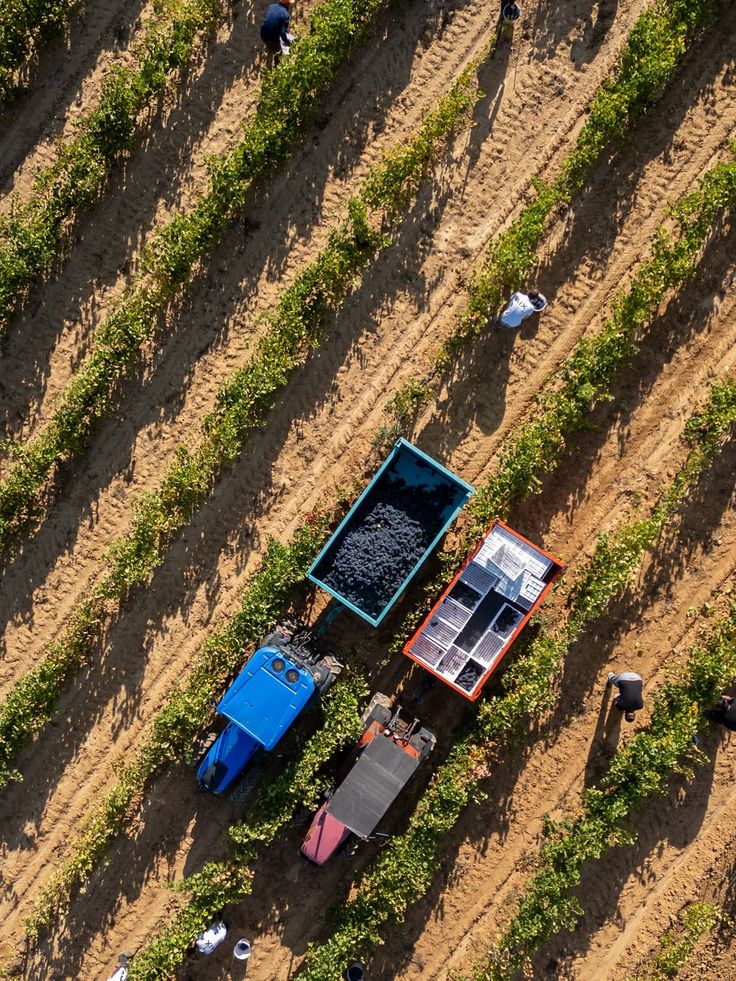
The grape harvest is one of the most important times of the year at a winery. It marks the culmination of several months of work in the vineyards and largely determines the quality of the wine to come. Contrary to popular belief, there is no set date for when the harvest begins. At our winery, each plot is carefully monitored to ensure the grapes are harvested at the perfect time.
But how do winemakers know when the grapes are ready? What criteria are used to determine when to start the harvest? From observations and tastings to analyses and weather reports, discover how grape ripeness is assessed before harvest.
Why is it so important to choose the right time for the grape harvest?
The quality of a wine begins in the vineyard. Harvesting grapes too early or too late can profoundly alter their balance and, consequently, the style of the wine.
Grapes harvested too early will generally exhibit the following characteristics:
Conversely, harvesting too late can lead to:
The goal, therefore, is to strike the right balance between sugar, acidity, tannins, and aromatic potential. Achieving this balance is one of the winemaker’s primary tasks before the harvest.
Monitor the ripeness of the grapes directly in the vineyard
The first step is to check the clusters regularly.
As the summer progresses, the grapes gradually develop until they reach maturity. Our teams keep a close eye on this period.
The color of the berries
In red grape varieties, the berries gradually change color from green to deep red, purple, or black, depending on the variety.
For white grape varieties, the berries turn a more golden color, sometimes becoming slightly translucent.
This development is an initial indicator of ripeness, but it is not sufficient to determine the date of the grape harvest.
The texture of the grape
When the grapes are nearing full ripeness:
Touch provides the winemaker with a wealth of information.
The Glitches
Seeds are also an excellent indicator.
When they are still green, they are not yet fully mature.
As the grapes ripen, they turn brown and become crunchier. This is a sign that the tannins are maturing, especially in red wines.
Tasting the grapes: an essential step
Nothing beats tasting the grapes right in the vineyards.
The winemaker regularly tastes several bunches from different rows to get a representative picture of each vineyard.
This tasting allows us to evaluate several criteria.
Blood sugar level
The more a grape ripens, the more sugar it naturally accumulates through photosynthesis.
This sugar will be converted into alcohol during fermentation.
Acidity
Acidity gradually decreases during ripening.
Finding the right balance is essential for producing fresh, well-rounded wines that are a pleasure to drink.
Flavors
Aromatic ripeness is sometimes different from sugar ripeness.
Depending on the grape variety, the grapes gradually develop aromas of fresh fruit, ripe fruit, flowers, or spices.
The winemaker’s role is to determine when these aromas are most pronounced.
The analyses confirm the observations
The winemaker’s experience is invaluable, but it is also supplemented by technical analyses.
Samples are collected from the various plots to measure several indicators.
Sugar content
It is used to estimate the wine’s future alcohol content.
Total Acidity
It contributes to the wine’s freshness and balance.
pH
In particular, pH affects the stability of wine and how it changes as it ages.
These analyses help confirm the impressions gained during tastings and refine the decision to begin the harvest.
The weather can change everything
Even when the grapes seem ready, weather conditions remain a key factor.
Heavy rain just before harvest can cause the berries to swell, dilute their concentration, and promote certain diseases.
Conversely, a heat wave can speed up ripening in just a few days.
That is why weather forecasts are monitored daily.
The decision on when to harvest is always based on a balance between the ripeness of the grapes and weather conditions.
Not all grape varieties ripen at the same time
On a vineyard, each grape variety has its own growth cycle.
White grape varieties often ripen before certain red grape varieties.
Even within the same variety, there may be a difference of several days between two plots, depending on:
The harvest therefore generally takes place over several weeks so that each plot can be harvested at the ideal time.
Our Expertise
The timing of the grape harvest is never decided at random.
Every decision is the result of:
This approach preserves the identity of each grape variety and produces wines that fully express the terroir of Servian and the Languedoc.
The Grape Harvest: The Beginning of a New Adventure
While the grape harvest marks the end of a cycle in the vineyard, it above all represents the beginning of a new phase: winemaking.
Every cluster harvested at the right time represents several months of work, observation, and patience. It is this commitment that allows us to craft authentic, well-balanced wines that are true to their terroir.
Choosing the right harvest date is much more than just a technical decision: it is one of the most important tasks in the winemaker’s craft, one that will set the tone for the upcoming vintage.
Carrière Pradal,
Domaine de la Massole,
34 290 SERVIAN
0033 (0)6 38 64 54 02
Visits by appointment only
Carrière Pradal,
Domaine de la Massole,
34 290 SERVIAN
0033 (0)6 38 64 54 02
Visits by appointment only

Carrière Pradal,
Domaine de la Massole,
34 290 SERVIAN
0033 (0)6 38 64 54 02
Visits by appointment only